Why This Exists
Legal professionals regularly confront technical terrain they do not live in.
- A causation dispute grounded in unfamiliar medical literature.
- A regulatory record spanning decades.
- An emerging technology introduced into a courtroom before standards have stabilized.
The usual options are inefficient or insufficient.
- Read everything yourself and lose time you don’t have.
- Delegate to a junior and receive a surface summary.
- Commission a specialist firm and pay for a report heavy on boilerplate.
- Or proceed without full clarity and risk exposure under scrutiny.
When credibility and case strategy are on the line, none of those options is good enough.
This service exists to fill that gap.
It is built for attorneys operating in technically complex matters.
What I Do
I produce structured technical research documents for legal professionals handling scientific, medical, regulatory, or technology-driven disputes.
Each document:
Separates established findings from contested claims
Identifies evidentiary weaknesses and methodological vulnerability
Maps areas of expert disagreement
Clarifies what the literature does (and does not) support
Concludes with direct analytical implications
This is not general research. It is a litigation-calibrated synthesis.
Where appropriate, the work may incorporate additional analytical layers such as opposing argument construction, expert landscape mapping, or focused literature review.
Research & Analytical Methodology
All work is produced through a structured synthesis framework designed for high-uncertainty litigation contexts.
The process involves:
The objective is not to generate new science, but to clarify what existing evidence can and cannot support under legal standards.
All conclusions reflect structured analysis of publicly available materials and are intended to inform professional evaluation — not replace credentialed expert testimony.
Scope & Professional Boundaries
This work does not constitute legal advice, expert testimony, regulatory compliance review, or primary investigation.
It does not create an attorney–client or expert relationship.
Documents are prepared within a defined scope and reflect publicly available information reasonably accessible at the time of research. Ongoing monitoring is not included unless separately agreed.
Why an Outsider
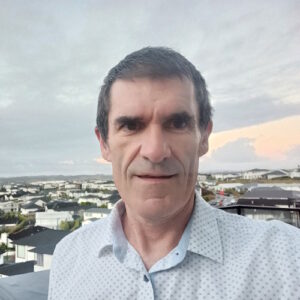
I am not a lawyer and hold no bar membership.
That distance is intentional.
Litigation arguments often become constrained by doctrinal habits or disciplinary framing. Scientific specialists approach disputes through their own field’s assumptions.
Independent research allows examination of the full evidentiary terrain without allegiance to either structure.
There are no vendor relationships and no external incentives shaping the analysis.
The work reflects what the research supports — no more and no less.
What I Bring
I translate dense, technical scientific material into structured analysis usable by experienced legal professionals.
Competing interpretations are mapped explicitly.
Confident claims are tested against underlying data.
Uncertainty is identified clearly rather than implied.
The constraint is not the topic.
The constraint is the litigation question the document must answer.
Engagements are limited to maintain depth and quality.
What Makes This Different
1
Structured for Litigation
Documents are organized around evidentiary realities: stable ground separated from contested claims, vulnerabilities surfaced explicitly, and implications stated directly.
2
Explicit Treatment of Weakness
Where studies are underpowered, inconsistent, or methodologically fragile, that is identified directly.
Preparation under scrutiny requires visibility into weakness, not concealment of it.
3
Adversarial Awareness
Where relevant, the strongest version of the opposing position is constructed using the same underlying research.
This is analytical stress-testing, not rhetorical positioning.
4
Defined Scope
One engagement. One defined deliverable. No ongoing dependency unless separately agreed.
If I do not believe I can produce what you need to the required standard, I say so before any work begins.
Scope is defined clearly in writing. Out-of-scope items are explicit.
Serving Locations
I work primarily with legal professionals in the United States, United Kingdom, Canada, Australia, New Zealand, and Ireland.
All work is delivered remotely.
Ready to clarify a technical question in your matter?
Or email ray@raydavey.com directly. You will receive a response within 24 hours.
You can also review sample work first.